
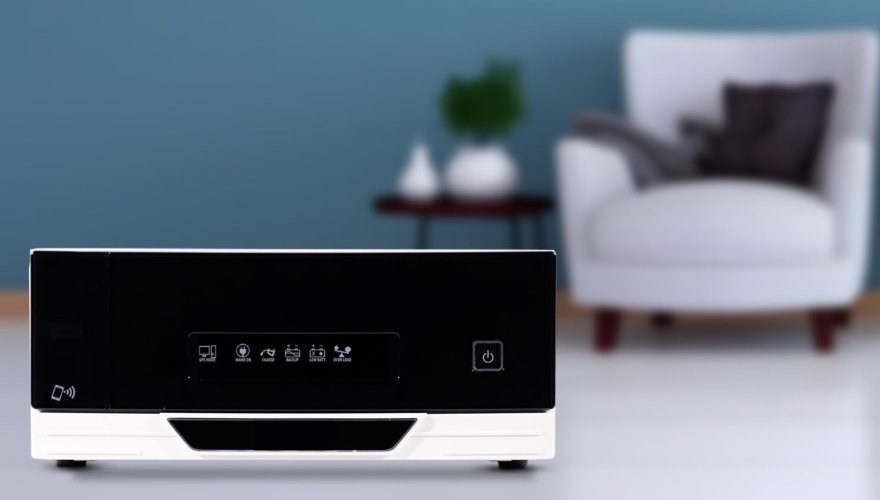
Power outages can disrupt daily life, making a UPS inverter an essential backup solution for homes. Whether you need to keep your lights on, power your Wi-Fi router, or run essential appliances, choosing the right inverter is crucial. Here’s a detailed guide to help you select the best UPS inverter for your home.
1. Assess Your Power Requirement
Before selecting an inverter, calculate the total power required by the devices you want to run during an outage. This includes:
-
Lights & Fans (40-75W per fan, 10W per LED bulb)
-
TV & Wi-Fi Router (50-100W combined)
-
Refrigerator (150-300W)
-
Laptop or Desktop (50-200W)
Example Calculation:
-
2 Fans = 150W
-
4 LED Bulbs = 40W
-
1 TV = 80W
-
1 Wi-Fi Router = 10W Total Load = 280W
2. Choose the Right Inverter Capacity (VA Rating)
Inverters are rated in VA (Volt-Ampere), which determines how much power they can supply.
To calculate the required VA, use the formula:
For a 280W load:
Round up to the nearest standard size, so a 400VA-600VA inverter is ideal for small homes. For higher loads, consider 900VA-1500VA inverters.
3. Select the Right Battery Capacity
The inverter’s backup time depends on the battery’s Ah (Ampere-hour) rating. The formula to estimate backup time:
For example, a 150Ah battery running a 400W load:
For longer backup, consider a 200Ah or 220Ah battery.
4. Pure Sine Wave vs. Modified Sine Wave Inverters
There are two types of inverters:
-
Pure Sine Wave Inverters: Best for sensitive electronics (TVs, laptops, refrigerators). Provides stable power, though slightly expensive.
-
Modified Sine Wave Inverters: Budget-friendly but can cause noise, flickering lights, and overheating in appliances.
For home use, a Pure Sine Wave inverter is the best choice.
5. Battery Type Matters
-
Tubular Battery: Long lifespan (5-7 years), best for high-power backup.
-
Flat Plate Battery: Cheaper but lasts only 3-5 years.
-
Lithium-ion Battery: Lightweight, fast charging, and long-lasting, but costly.
For home inverters, Tubular Batteries (150Ah-200Ah) are recommended for durability.
6. Additional Features to Look For
When selecting a UPS inverter, check for these features: ✔ Automatic Voltage Regulation (AVR) – Protects against voltage fluctuations. ✔ Overload Protection – Prevents damage due to excess load. ✔ Fast Charging – Helps batteries recharge quickly. ✔ Solar Compatibility – Supports solar panels for eco-friendly power.
7. Top Recommended Inverter Brands
Some of the best inverter brands in India include:
-
Luminous (Eco Volt, Zelio+ Pure Sine Wave)
-
Microtek (UPS SEBz Series)
-
Exide (Exide Home UPS)
-
Su-Kam (Falcon+ Series)
-
V-Guard (Prime Series)
-
APC by Schneider (Home UPS Series)
8. Choosing the Right Model Based on Needs
| Requirement | Recommended Inverter |
|---|---|
| Basic Load (Lights, Fans, Wi-Fi) | 600VA – 900VA, 150Ah Battery |
| Medium Load (TV, Laptop, Fans, Lights) | 900VA – 1500VA, 200Ah Battery |
| High Load (Fridge, Water Pump, AC) | 2000VA+, Higher Ah Battery |
Final Tips Before Buying
✅ Check Warranty: Choose models with at least 2-3 years inverter warranty and 3-5 years battery warranty.
✅ Consider Future Expansion: If you plan to add more appliances later, go for a higher VA rating.
✅ Look for Service Availability: Choose brands with good after-sales service in your area.
✅ Go for Solar Inverter (Optional): If you want long-term savings, consider a solar-compatible inverter.
Conclusion
Choosing the best UPS inverter for home use depends on power needs, battery capacity, and efficiency. If you need a reliable and long-lasting power backup solution, go for a pure sine wave inverter with a tubular battery. Consider your budget, future expansion needs, and warranty before making the final decision.
Do you have any questions or need help selecting a model? Drop a comment below!